
Smart electrical panels: what they are, features and benefits
If you’ve ever wished your electrical panel could tell you what’s actually using power in your house, turn on or shut off the hot tub, or shut things off automatically during an outage, a smart electrical panel is that dream come true.
Also called smart load centers, these systems layer monitoring, control, and automation on top of what used to be a simple safety device. Instead of just tripping when something is overloaded, your electrical panel becomes a live dashboard for the way your home or cottage actually uses electricity.
What is a smart electrical panel?
A traditional breaker panel has one main job: safely distribute power and shut a circuit down if it’s overloaded. That’s it. It doesn’t tell you what’s using energy, what it costs, or how close you are to overloading a circuit or a generator.
With smart electrical panel (or smart load center) you get:
- Real-time monitoring of each circuit
- Remote on/off control of individual breakers via app
- Scheduling (turning circuits on and off automatically)
- Load management for backup generators, batteries, and EV chargers
- Extra safety features like advanced fault detection
How smart panels actually work
There are two ways to get a smart panel working in your home:
- New: Buy and install a fully integrated smart panel
- Retrofit: Install a smart panel module that sits beside your existing panel and controls selected circuits via smart breakers or relays
The components of a smart panel that give it its ‘smart’ functionality are:
- Smart breakers or relays: Control modules that can be switched and monitored electronically
- Current sensors: Measure exactly how much power each circuit is drawing
- Connectivity: Wi-Fi or Ethernet back to your home network
- App or web portal: A computer/mobile application where the controlling and the scheduling happens. It’s on this dashboard display that you can see live usage and control circuits
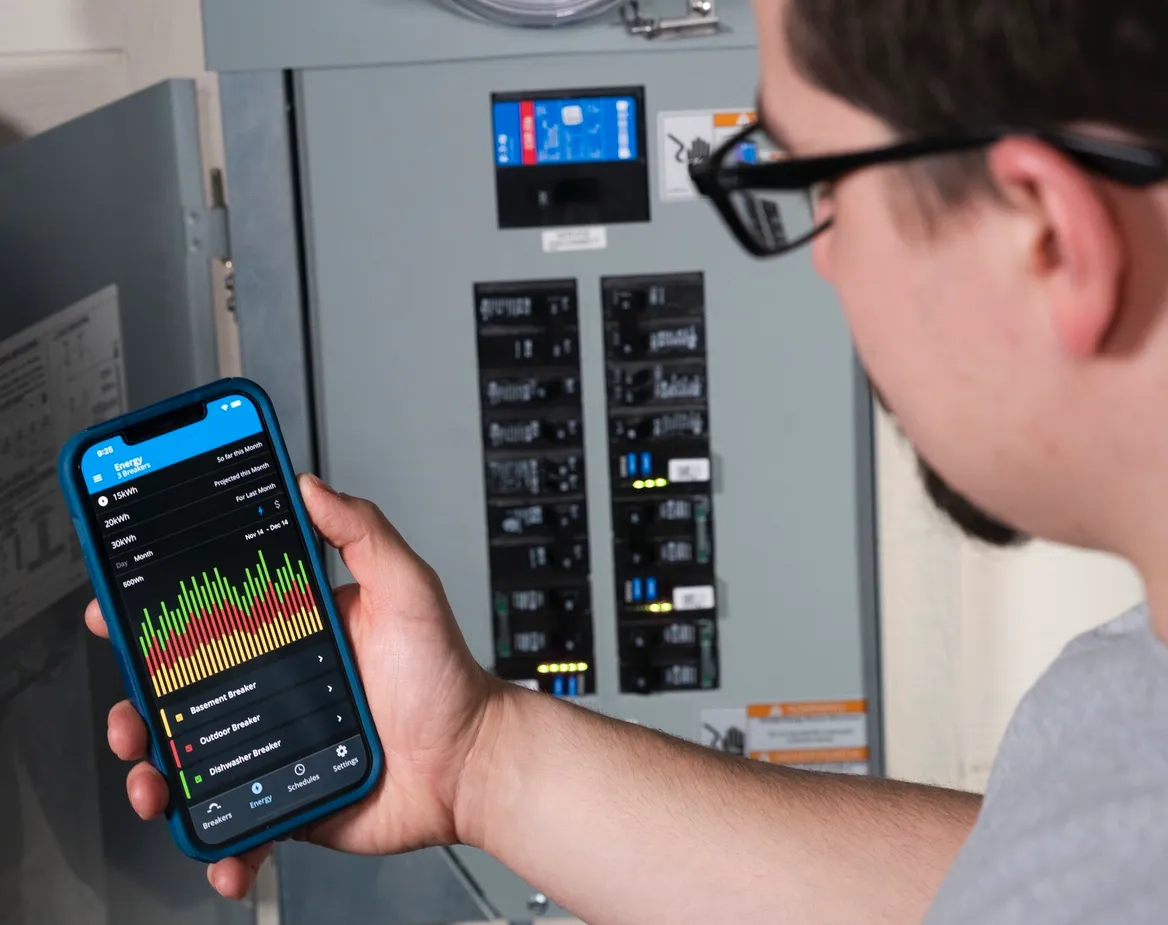
From your phone or computer, you can monitor your home’s electricity usage, including total house draw and per-circuit usage. You can turn individual circuits on or off, set rules for power outages and generator operation, and build schedules for each circuit, for example hot tub heating times.
If your Internet goes down, the panel reverts to behaving like a traditional breaker panel, so safety is assured.
Everyday features homeowners actually use
In theory, smart panels can do a lot. In reality, there are a handful of features that our clients really like.
Safe breaker control
With a smart load center, any controlled circuit can be turned on or off from an app—whether you’re in the mechanical room, at the office, or vacationing in another part of the world. That’s a big plus from a safety point of view, for instance when:
- A water sensor trips at the cottage, you can shut off the well pump circuit remotely before things get worse
- A guest or tenant calls from a home, suite or bunkie, you can safely kill or reset a specific circuit without sending them down to figure things out at the panel
- It’s inconvenient for you to hike down to the basement every time something trips
With most systems, you can also get notifications when a breaker trips, then decide if it’s safe to reset it.
Scheduling for time-of-use savings
In Ontario, the cost of electricity approximately halves during weekends and between 7pm and 7am. So it makes sense to schedule individual circuits to run during cheap times. Common examples of this include:
- Hot tub: Program the breaker to turn off during weekday peak hydro rates and when nobody’s home, then come back on an hour or two before you typically use it. A hot tub might only lose roughly a degree an hour, so there’s no point heating it 24/7 when it can recover quickly before you climb in.
- Ice melt cables and roof de-icing: This is surprisingly power-intensive, so switching on only during weather events instead of all the time can save quite a bit of power.
- Garage heaters and electric furnaces: Keep comfort where you need it, which is typically not very often.
One homeowner using smart scheduling on their hot tub and other large electricity load applications reported a 15% reduction in electrical consumption, without their changing day-to-day lifestyle, simply by not powering things on when they weren’t in use.
Energy data and cost awareness
The real power of a smart panel is the data it quietly collects for you. Most systems will show, in real time and historically, the power your home is drawing in watts or kilowatts, as well as per-circuit usage over hours, days, weeks, months and years. You can see your top-consuming circuits, which are often heat pumps and electric furnaces, then hot tubs, pool equipment, and EV chargers. Seasonal loads like ice melters or garage heaters spike in winter.
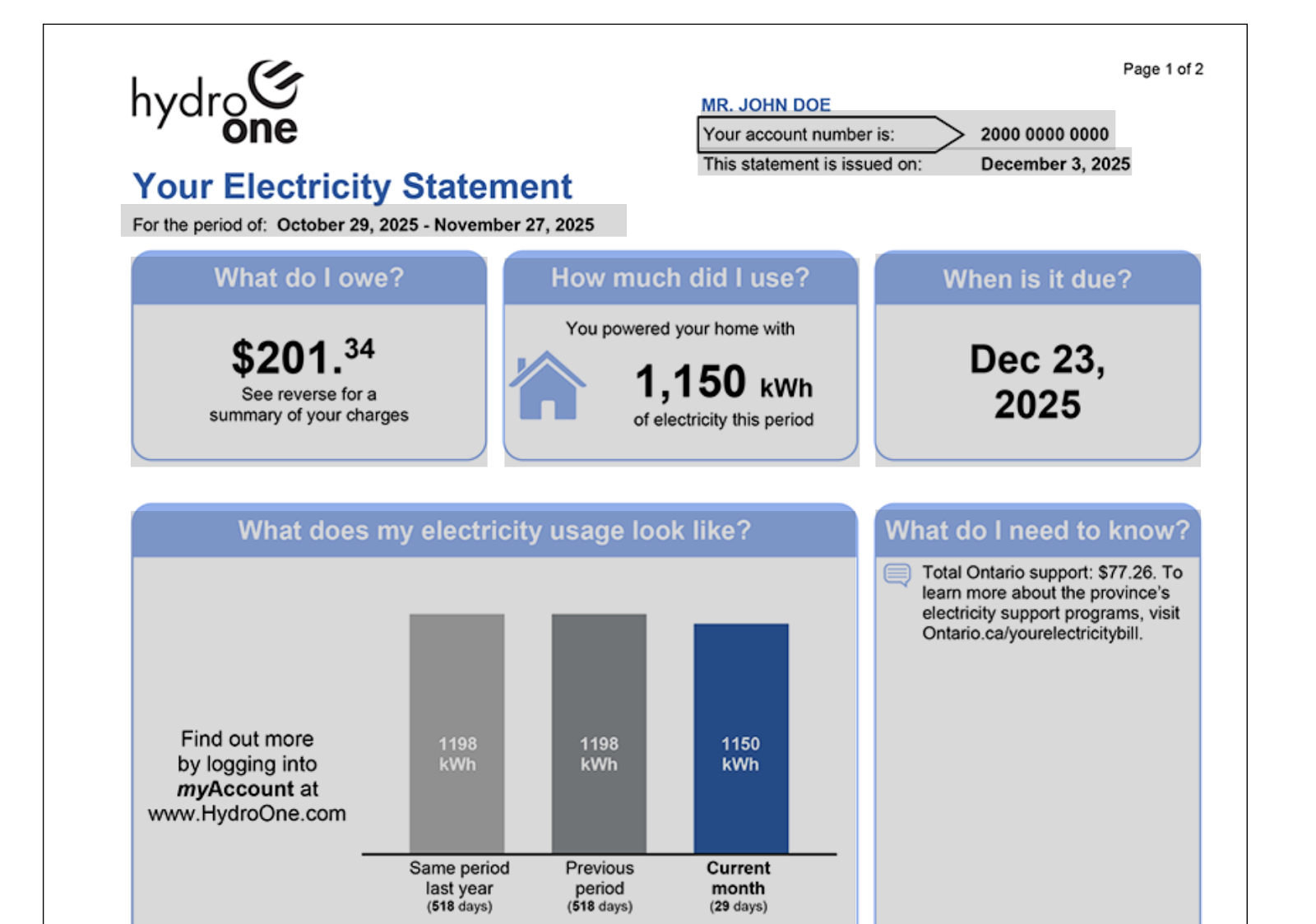
If you know your hydro pricing rate, the app then estimates what each circuit is costing you monthly. In markets with complex rate structures like Ontario it won’t be accurate, but it’s enough to see which loads justify further attention.
Once you can see that, it becomes a lot easier to decide where the gray area of cost-benefit lies—for example, whether it’s worth smart-controlling the hot tub or that second fridge in the garage.
Smart panels and generator protection
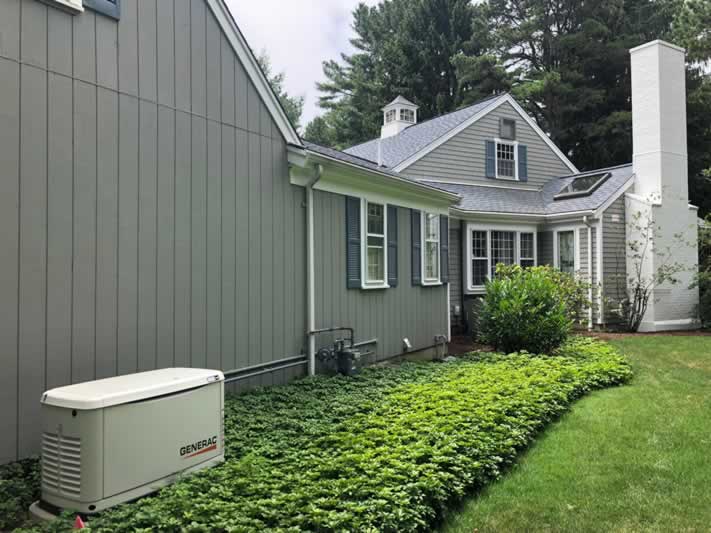
Where smart panels really shine is when the power goes out and the generator turns on. Without a smart panel, a fairly common scenario is one in which the generator starts up and tries to power the oven, the hot tub and the 40-amp EV charger. The combined load overwhelms the generator, which either trips its main breaker and stops powering everything, or struggles along at maximum output, under-volting appliances and stressing their motors and compressors.
With a smart panel, you can avoid this by writing rules. For instance, “if utility power fails, shut off these breakers immediately” (EV charger, range, hot tub, non-essential plugs). A similar rule might be “keep these circuits always on under generator or battery” (well pump, fridge/freezers, sump pump, primary heat, selected lighting).
With this kind of setup, your generator is much less likely to overheat or trip. You avoid low-voltage abuse of motors and compressors in fridges and well pumps, and preserve limited backup power for the motors you need to keep running during an outage.
In more advanced setups with solar and home batteries, the smart panel can also prioritize which loads run off stored energy, stretching backup runtime significantly.
For cottages and rural properties with modest generators and growing electrical demand (heat pumps, EVs, hot tubs), this kind of automated load shedding is arguably more valuable than the energy data alone.
Retrofit vs. new build
When we are planning a project—custom home or cottage, major addition, or extensive renovation—we consider whether the overall electrical design should incorporate smart metering. In such cases, we typically recommend a new smart panel. Retrofitting is, however, an option.
For existing homes, retrofit smart panels or load management modules can be installed beside the current, standard panel and control a set number of circuits (often around a dozen). This lets you target the biggest loads first–the EV charger, the hot tub, heat pumps, etc. as well as essential equipment such as sump pumps, well pumps and freezers.
This solution is less expensive than a rip-and-replace panel change, but you will not get control over every circuit. New smart panels cost more than retrofit modules but give a cleaner layout, more uniform data across circuits, and better future flexibility for more circuits: solar power, battery banks and EV charging, for example.
When does a smart panel make sense?
Smart panels are especially worth considering if:
- You rely on a backup generator or battery system and want it to behave predictably under load
- You have or are planning EV charging, especially more than one EV
- You’re in a time-of-use hydro market (like Ontario) and want to push big loads to off-peak hours
- You have expensive or power-hungry loads: hot tub, sauna, pool, electric in-floor or garage heating, or ice melt cables.
For some homeowners, the peace of mind and control around outages that a smart panel imparts makes smart metering entirely worth it. For others, it’s about load shifting to cut power consumption.
What’s your thought on smart metering? To find out more, or discuss the power-planning aspect of your build or renovation, don’t hesitate to contact us. We are always up for a conversation. Please get in touch at your convenience.